
A lodge with no mains connection has to find, store, clean and dispose of every litre it uses. That turns water from a utility bill into a daily budget with a hard ceiling.
Yield comes before design
The first survey on an off-grid site measures what the land gives: a spring flow, a borehole test, or the roof area available for rainwater capture.
That figure is seasonal, and the design has to work in the worst month rather than the average one. A spring that halves in the dry season effectively halves the lodge.
Storage smooths the gap. Tanks sized to carry several weeks of demand let a lodge trade a wet season surplus against a dry season deficit.
Treatment splits into two streams
Drinking water needs filtration and disinfection, commonly sediment filters followed by ultraviolet light or ceramic elements. That process is energy-cheap but requires consumables and maintenance.
Water for showers, laundry and cleaning has a lower standard, so it is often treated separately and less intensively. Splitting the streams reduces both cost and power draw.
The split also means a failure in one system does not shut the lodge. Guests can wash while the drinking supply is repaired.
Greywater is reused rather than discarded
Water from basins, showers and kitchens carries soap and food residue but no sewage. Once it passes through a grease trap and a gravel or reed bed, it can irrigate.
Many lodges route it to ornamental planting or a kitchen garden, which turns a disposal problem into a supply. It also removes the load from the septic system.
This is why off-grid properties are particular about which soaps are used. Products with heavy salts or persistent surfactants damage the beds that make reuse possible.
Fixtures do the quiet work
Aerated taps, low-flow showerheads and dual-flush cisterns cut consumption without the guest noticing much. The savings compound across every room and every night.
Laundry is usually the single largest draw, which is why linen change schedules on remote properties are longer than in city hotels.
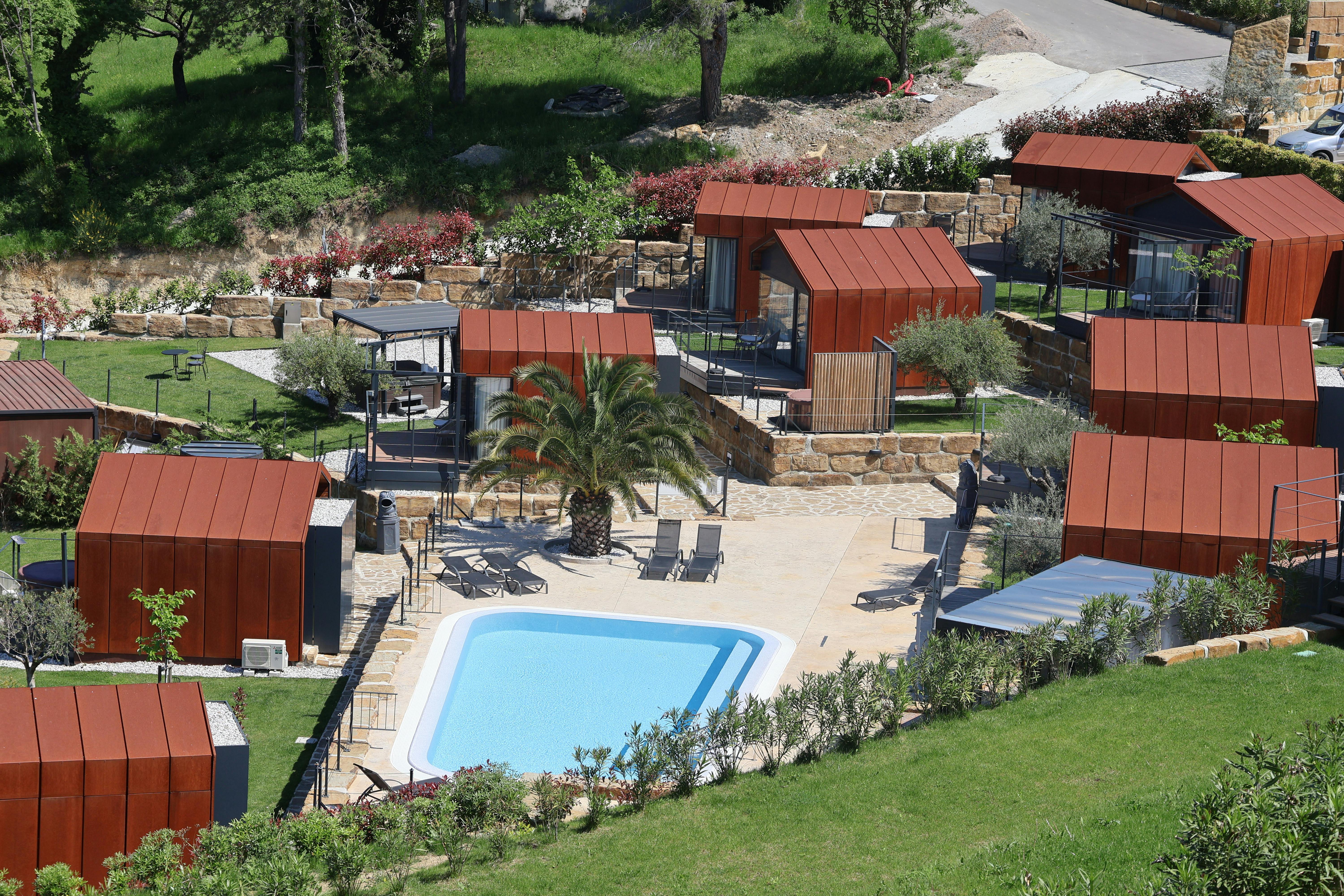
Pools are the other large item. Where they exist, they tend to be natural or plant-filtered systems that lose water only to evaporation rather than to backwashing.
The budget shapes the guest experience
Once water is a stock rather than a service, everything downstream is rationed against it: room count, garden size, menu choices and how often towels are washed.
Lodges that explain this openly tend to see less waste, because guests behave differently when a supply is visibly finite.
The properties that struggle are usually those that added rooms or a pool after the original survey, then discovered the yield had not grown with them.