
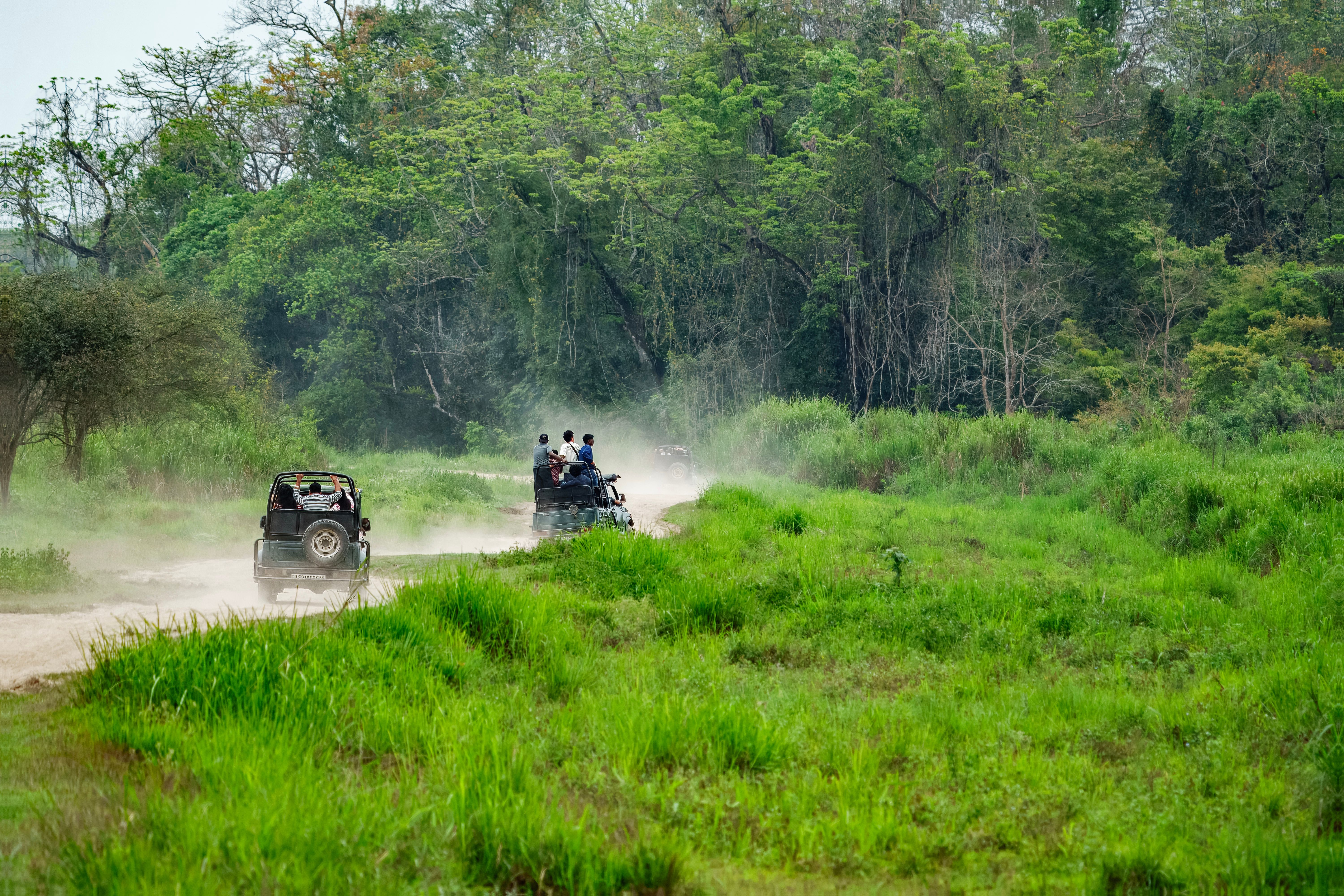
The gap between a protected area on paper and a protected area in practice is filled by people on the ground. Visitor fees are the main thing that pays for them.
Protection is mostly wages
Anti-poaching work is patrolling: teams walking transects, checking snare lines, staffing gates and responding to reports. Equipment matters, but the recurring cost is salaries.
Those salaries must be paid every month regardless of season, donor cycles or political attention. A protected area that cannot meet payroll loses coverage almost immediately.
Fee income has the useful property of arriving continuously and locally, which suits a recurring obligation better than grants awarded in project cycles.
Patrol coverage is a distance problem
Large parks cannot be watched everywhere at once, so patrols are allocated to routes where incursion is most likely: boundaries, water sources, roads and known access points.
Coverage scales with staff numbers, vehicles and fuel, all of which come out of the same budget. Fewer resources means longer gaps between visits to any given sector.
Poaching responds to those gaps. Where patrol frequency falls, snaring rises in the areas that are visited least, which is why coverage rather than equipment is the usual constraint.
Fees also buy information
Most interceptions begin with information rather than a chance encounter in the bush, and that information comes from people living around the park.
Maintaining those relationships requires a permanent presence in surrounding communities, community liaison staff and, in many programmes, revenue-sharing arrangements.
Where park revenue reaches surrounding households, the incentive to report shifts, because the park becomes a source of income rather than a restriction on land use.
The revenue is fragile
Tourism income collapses quickly during political instability, health emergencies or security incidents, and it recovers slowly afterwards.
Protection costs do not fall during those periods. If anything they rise, because economic pressure around the park increases while enforcement capacity is dropping.
This is the structural weakness of fee-funded conservation, and it is why many areas pursue endowments, concession rents and carbon finance alongside visitor income.
Where the fee goes matters
Not all payments reach protection. In some systems fees flow to a national treasury and return only partially, while concession rents may stay with the authority directly.
Community conservancies typically retain a larger share locally, which is why they often show stronger wildlife recovery than adjacent state land with similar habitat.
A traveller comparing operators can reasonably ask which entity receives the fee and what proportion is retained, since that determines whether the payment funds patrols.