
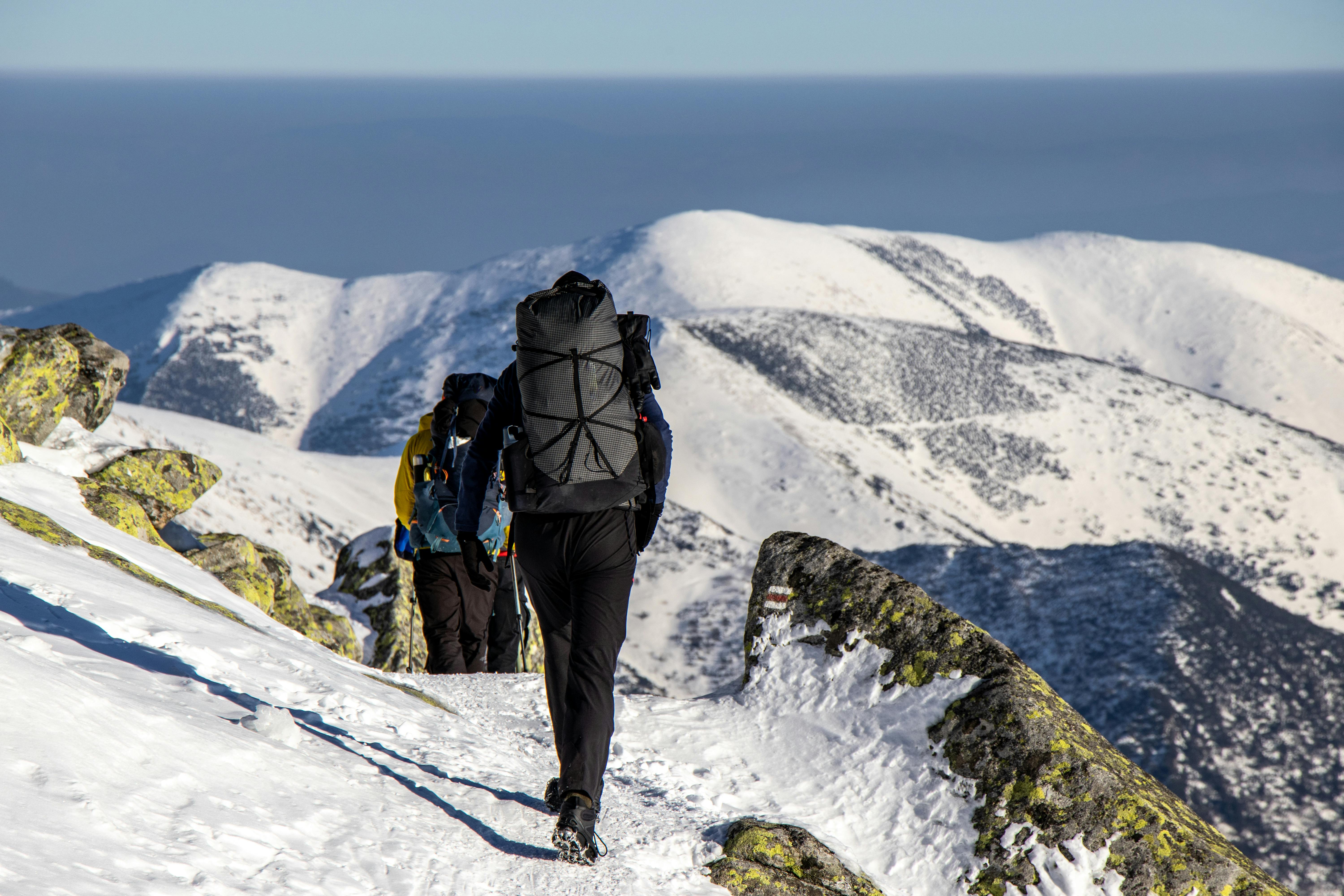
A switchback trail covers several times the horizontal distance of a direct line up the same slope. The extra distance is buying gradient control, which is what keeps the hillside intact.
Gradient determines how fast water moves
Water running down a slope gains speed with steepness, and its capacity to carry soil rises sharply with that speed. A small increase in gradient produces a large increase in erosion.
A direct path up a hillside is the steepest possible line and therefore the fastest channel available. It becomes a watercourse in the first heavy rain.
Switchbacks hold the trail at a shallow gradient across the slope, so water crossing it moves slowly and drops its sediment rather than carrying it downhill.
The design sheds water sideways
A well-built traversing trail is outsloped, meaning the surface tilts slightly downhill so water crosses and leaves rather than running along the path.
Drainage features reinforce this: rock bars and dips set at intervals that get water off the tread before it accumulates enough volume to cut.
The turns themselves are the vulnerable points, since they concentrate flow. Builders usually place them on rock, on a ridge or wherever the ground drains naturally.
Cutting corners destroys the system
A shortcut between two legs of a switchback creates exactly the steep direct channel the design was built to avoid, and it connects two sections of trail with a fast route for water.
Once a shortcut appears, others follow it, and within a season it is a bare scar. Water entering the trail below it then arrives with more speed and volume than the drainage was sized for.
The damage extends beyond the shortcut, because the drainage features downhill are overwhelmed and begin to fail in sequence.
Barriers and turn design respond to it
Trail crews build turns with a raised outer edge, place rock or brush across the inside of the corner, and design turns so the shortcut line looks awkward or is physically blocked.
Where terrain allows, builders use a wide turning radius on a natural bench, which removes the temptation because the shortcut saves little.
Signs asking people not to cut are the weakest tool available, which is why the better solution is usually structural rather than instructional.
The cost is distance, and it is worth paying
Switchbacks make routes longer and can feel inefficient on an exposed slope where the summit is visible the whole way.
The alternative is a direct path that erodes into a rocky trench within a few seasons and becomes harder and more dangerous than the longer route.
Older direct paths on well-walked mountains show the result plainly, and rebuilding them into a stable line is among the most expensive work a trail organisation undertakes.