
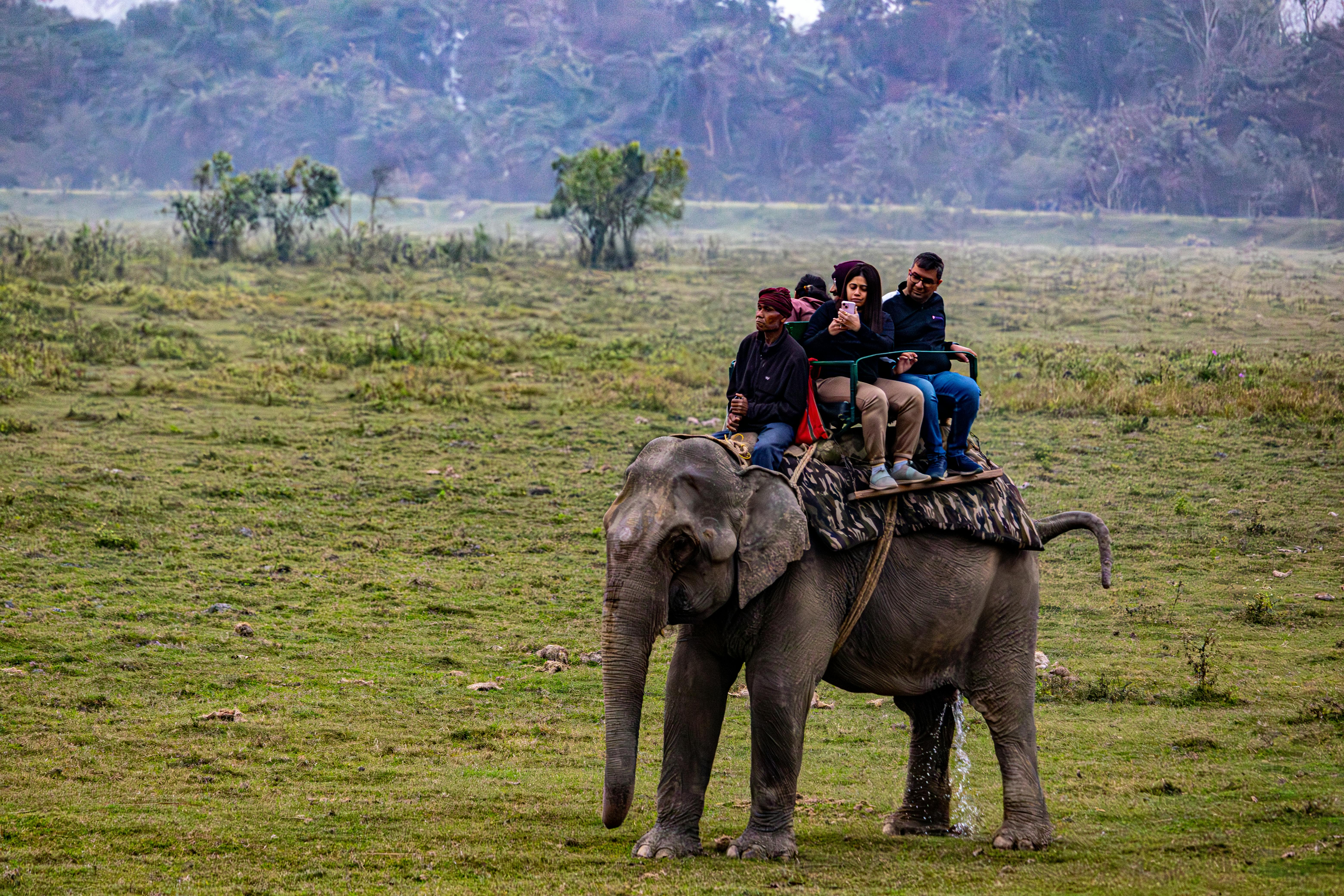
Guides who refuse to move closer are applying a threshold rather than being cautious. The distance at which an animal stops behaving normally is measurable, and the rules are built around it.
Flight initiation distance is the underlying measure
Every animal has a distance at which an approaching object triggers a response, from a raised head to full flight. It is consistent enough per species to be used as a management tool.
Behaviour changes well before flight. Vigilance rises, feeding stops and young are gathered in, all of which happen at ranges where the animal appears calm to an observer.
Minimum approach distances are set outside that behavioural threshold rather than outside the flight threshold, because the point is to observe undisturbed behaviour.
The threshold moves with circumstance
A predator on a kill tolerates far less approach than the same animal resting, because it is protecting a resource it may lose to scavengers.
Females with young, animals at water in the dry season, and males in breeding condition all have expanded thresholds. So do animals in areas where people have hunted them.
Good guides adjust upward from the published minimum according to what the animal is doing, which is why two sightings of the same species are handled differently.
Vehicles are tolerated as a single shape
Animals in long-visited reserves habituate to vehicles as objects, not to people. A vehicle is a large predictable shape that has never harmed them and does not resolve into individual humans.
Standing up, leaning out or dismounting breaks the outline and reintroduces the human form, which is why guides insist on staying seated and inside.
This is also why engine noise and movement style matter more than proximity in some situations. Predictability is what the animal has habituated to.
Crowding multiplies a small effect
One vehicle at a correct distance has minimal impact. Six vehicles at the same distance surround the animal and remove its escape routes, which is a different situation entirely.
Reserves manage this with vehicle limits per sighting and radio protocols that queue arrivals, so the total pressure stays near what a single vehicle produces.
Where those limits are absent, hunting attempts fail, kills are abandoned and animals shift their activity to hours when vehicles are not present.
Off-road driving is the larger cost
The most damaging pressure to close distance is the request to leave the track, which compacts soil, crushes vegetation and creates informal routes that others follow.
Repeated over a season, this converts open habitat into a network of tracks and changes drainage, which outlasts any individual sighting.
Reserves that permit off-road driving usually restrict it to designated vehicles and conditions, and the restriction is about the ground rather than the animal.