
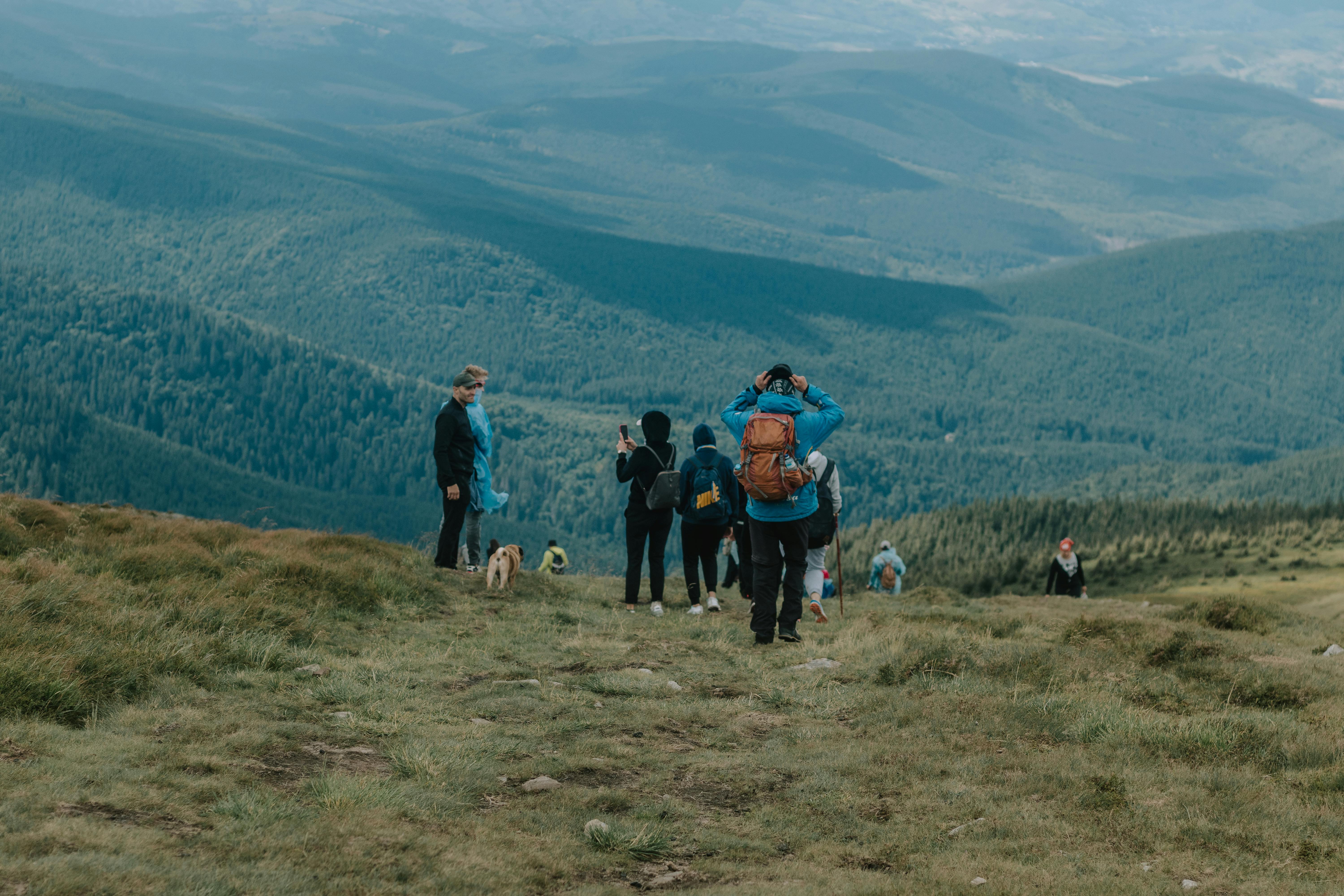
Popular trails deteriorate visibly from one season to the next while maintenance work continues throughout. The mismatch exists because boots start the damage and water finishes it.
Footfall breaks the surface, water removes it
Walking compacts soil and destroys the vegetation and root structure that hold it together. That alone would produce a hard, durable path.
The problem is that a compacted path sheds water instead of absorbing it, and a path running downhill becomes the preferred channel for everything falling on the slope above.
Flowing water carries soil away, and each storm deepens the channel. The trail becomes a gully, which collects more water still, and the process accelerates rather than levelling off.
Widening happens on the edges
Once a trail is rutted, wet or rocky, walkers step around it. Each detour compacts new ground beside the original line and kills the vegetation there.
The new strip then loses its own surface and becomes unpleasant, pushing traffic outward again. Trails in soft ground can end up several times their intended width.
Braided sections in alpine and boggy terrain are the visible result, and they remove far more vegetation than a single deep path would have.
Repair is slow, skilled and seasonal
Effective repair means rebuilding drainage: cutting water bars, installing cross-drains, laying stone and reshaping the surface so water leaves the trail rather than running along it.
That work is manual, requires materials carried or flown to site, and in mountain terrain can only be done in a short window between thaw and first snow.
A single crew may complete a few hundred metres in a season on difficult ground, while the damage advances along the whole route simultaneously.
Rain and freeze cycles set the pace
Erosion rates depend on rainfall intensity, soil type and gradient far more than on visitor numbers. A steep path on volcanic ash degrades under traffic a gentle limestone path would shrug off.
Freeze-thaw cycles loosen surfaces in spring, which is exactly when trails are wettest and least able to withstand use.
This is why some trails close seasonally. The closure protects the surface during the weeks when a given amount of walking does several times its usual damage.
Walker behaviour still matters
Walking through a puddle rather than around it keeps the trail single-width, which is counterintuitive and is the single most useful habit on soft ground.
Staying on constructed surfaces, avoiding shortcuts across switchbacks and keeping off closed sections all reduce the load where repair capacity is scarcest.
None of it stops erosion, which is a hydrological process. It slows the rate enough for maintenance to keep pace on the sections that matter most.